
Inventory before migration
You cannot migrate what you have not inventoried. Start with TLS endpoints, JWKS, SSH, STARTTLS, and third-party dependencies — then map findings to NSM-10, CMMC, or NIST IR 8547 tiers.
Start with the foundations curriculum at /learn/topics/quantum-crypto-foundations and the 4-week path at /blog/learning-quantum-crypto-4-week-path.
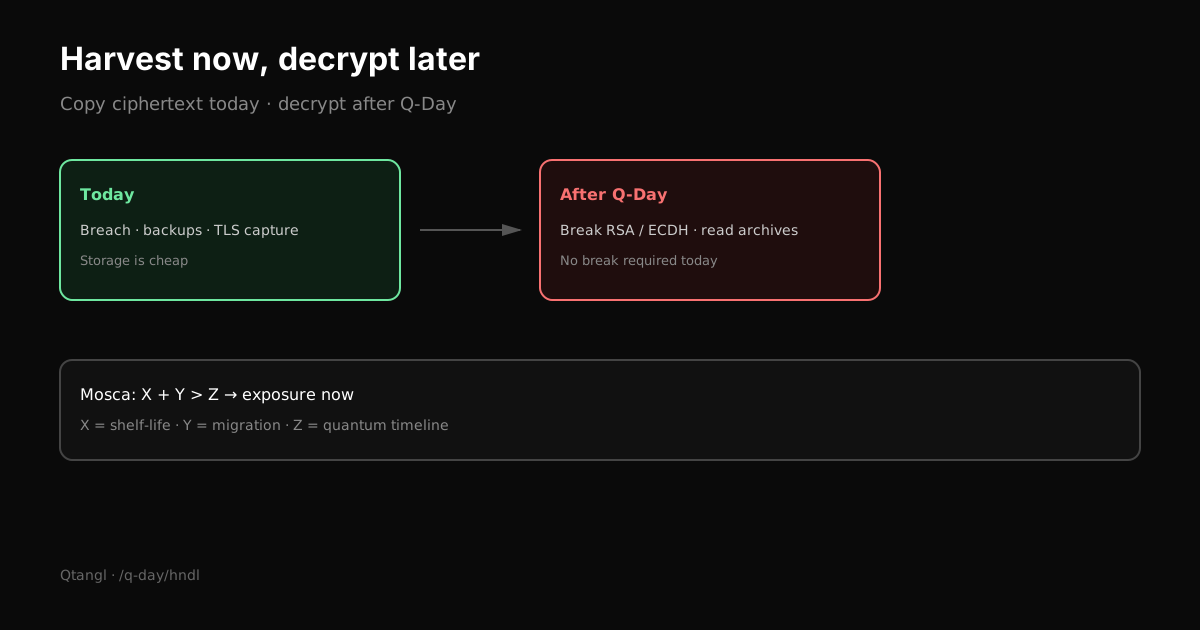
Quantify HNDL exposure
Use Mosca inequality (X + Y > Z) to determine whether ciphertext captured today may be readable before migration finishes. The HNDL hub at /q-day/hndl includes an interactive exposure estimator.
Assess → Monitor → Convert
Assess delivers baseline CBOM and signed PDF. Monitor catches crypto drift between audit cycles. Convert attaches re-scan proof to remediation items. See /journey for the full maturity model.
Resources to open next
The goal of this guide is to help you navigate toward the right tools, not stop at the overview. The resources below are the strongest next clicks for this topic.
liboqs
C library for prototyping and experimenting with quantum-resistant cryptography
2,946 stars · Updated 3mo ago

PQClean
Clean, portable, tested implementations of post-quantum cryptography
923 stars · Updated 3mo ago