Skip to content

Blog

Q-Day readiness field notes.

PQC inventory, crypto drift, HNDL urgency, and signed evidence — for security and compliance teams.

Featured

Video learning

15 video companions with embedded players.

Each article embeds the source video and adds practitioner takeaways, NIST citations, and inventory steps. Browse the full curriculum on the quantum crypto learning hub.

View all 15 video companions →

Q-Day readiness

Remediation board with verify-fix workflow.

Convert

Closing the loop: verify-fix in Convert

Attach re-scan proof to remediation items and export live workflowStatus.

How security teams prove fixes with verification scans and signed exports.

Read article

CycloneDX CBOM export fields and remediation mapping.

Q-Day readiness

Reading a Qtangl CBOM export: field-by-field guide

Walk through a sample CBOM JSON — algorithms, assets, and GRC integration.

Walk through a sample CycloneDX Crypto Bill of Materials — algorithms, assets, and GRC integration.

Read article

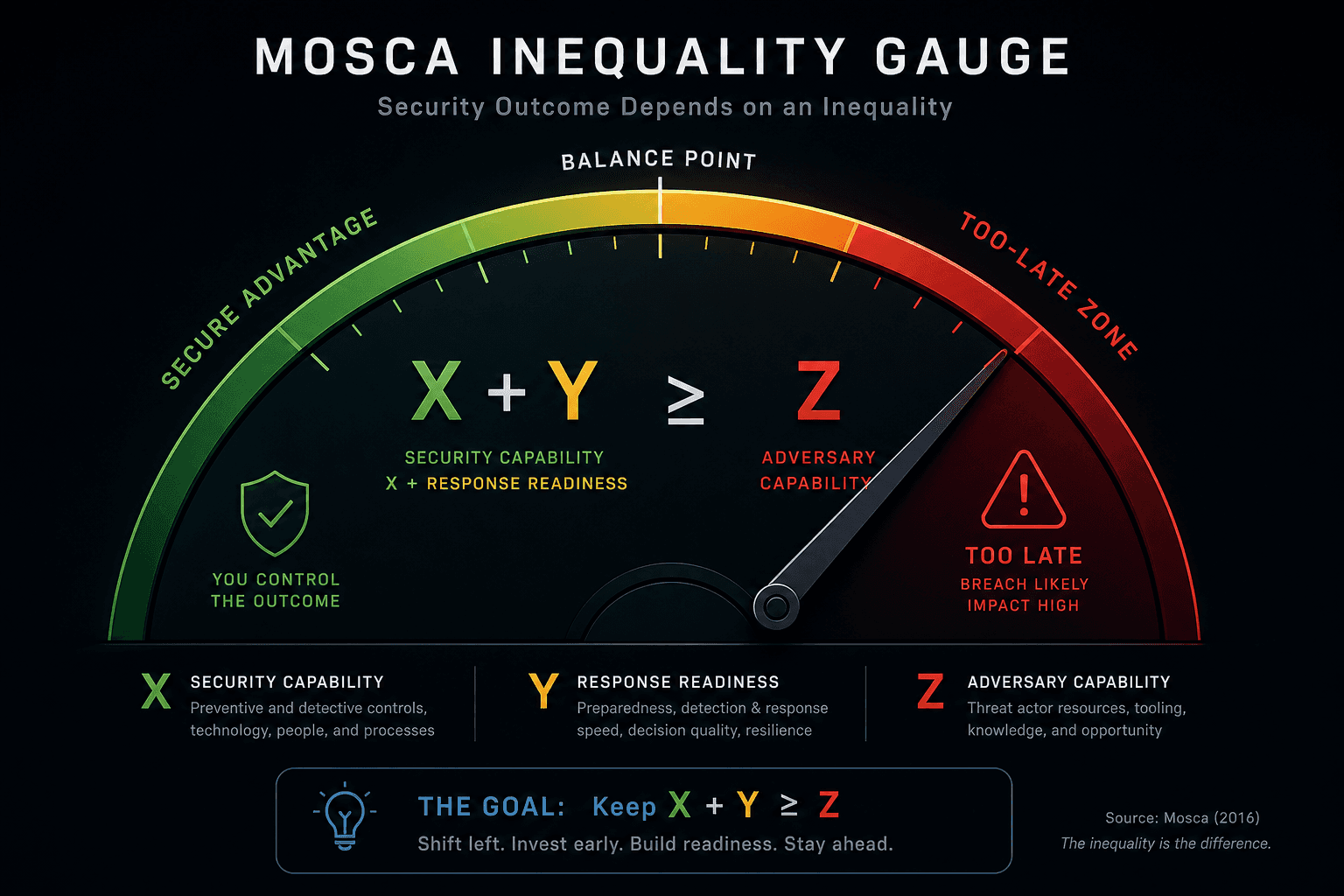
Mosca inequality X plus Y greater than Z diagram.

Q-Day readiness

Mosca inequality explained for CISOs

Turn Mosca's X + Y > Z into a board-ready planning question.

Turn Mosca's X + Y > Z into a board-ready planning question for HNDL exposure.

Read article

Unified crypto drift monitoring dashboard.

Monitor

Unified crypto drift monitoring in 2026

Drift is not just TLS scan diff — unified snapshots across discovery sources.

Snapshots across external, host, code, and CBOM sources with SIEM-ready webhooks.

Read article

Crypto drift diff between consecutive scans.

Monitor

Crypto drift: why one scan is not enough

Why a baseline scan decays — and how Monitor catches regression.

A baseline scan satisfies this quarter's board slide — it does not catch next week's deployment.

Read article

Monitor alert configuration for crypto drift.

Monitor

Setting up Q-Day Monitor alerts

Configure re-scan cadence, drift alerts, and readiness score trends.

Configure re-scan cadence, drift alerts, and readiness score trends.

Read article

Full-stack cryptographic posture management overview.

Q-Day readiness

Qtangl full-stack cryptographic posture management

Discovery depth across host, code, and binary — one signed evidence pipeline.

Host sensor, code scan, and binary CBOM discovery ship as enterprise Yes — internally validated at scale.

Read article

PQC vendor comparison landscape matrix.

Q-Day readiness

Post-quantum readiness vendors compared (2026)

Honest map of CPM vendors — and where signed verifiable evidence differentiates Qtangl.

Landscape comparison of PQC readiness platforms — discovery methods, verifiable evidence, and mid-market fit.

Read article

PQC platform evaluation checklist.

Q-Day readiness

How to evaluate a PQC readiness platform

RFP checklist to separate discovery theater from evidence auditors verify.

RFP checklist for CISOs — discovery, evidence, drift, CBOM, and mid-market fit.

Read article

Crypto discovery method comparison diagram.

Q-Day readiness

Crypto discovery methods compared

Five discovery methods, their blind spots, and how vendors anchor to each.

Agentless vs host agents vs code scan vs KMS — why combine 2–3 methods.

Read article

Cryptographic Posture Management category overview.

Q-Day readiness

What is Cryptographic Posture Management (CPM)?

The 2026 label for post-quantum readiness — inventory, drift, and proven remediation.

CPM defined — crypto-agility, CBOM, and how it differs from CLM and GRC.

Read article

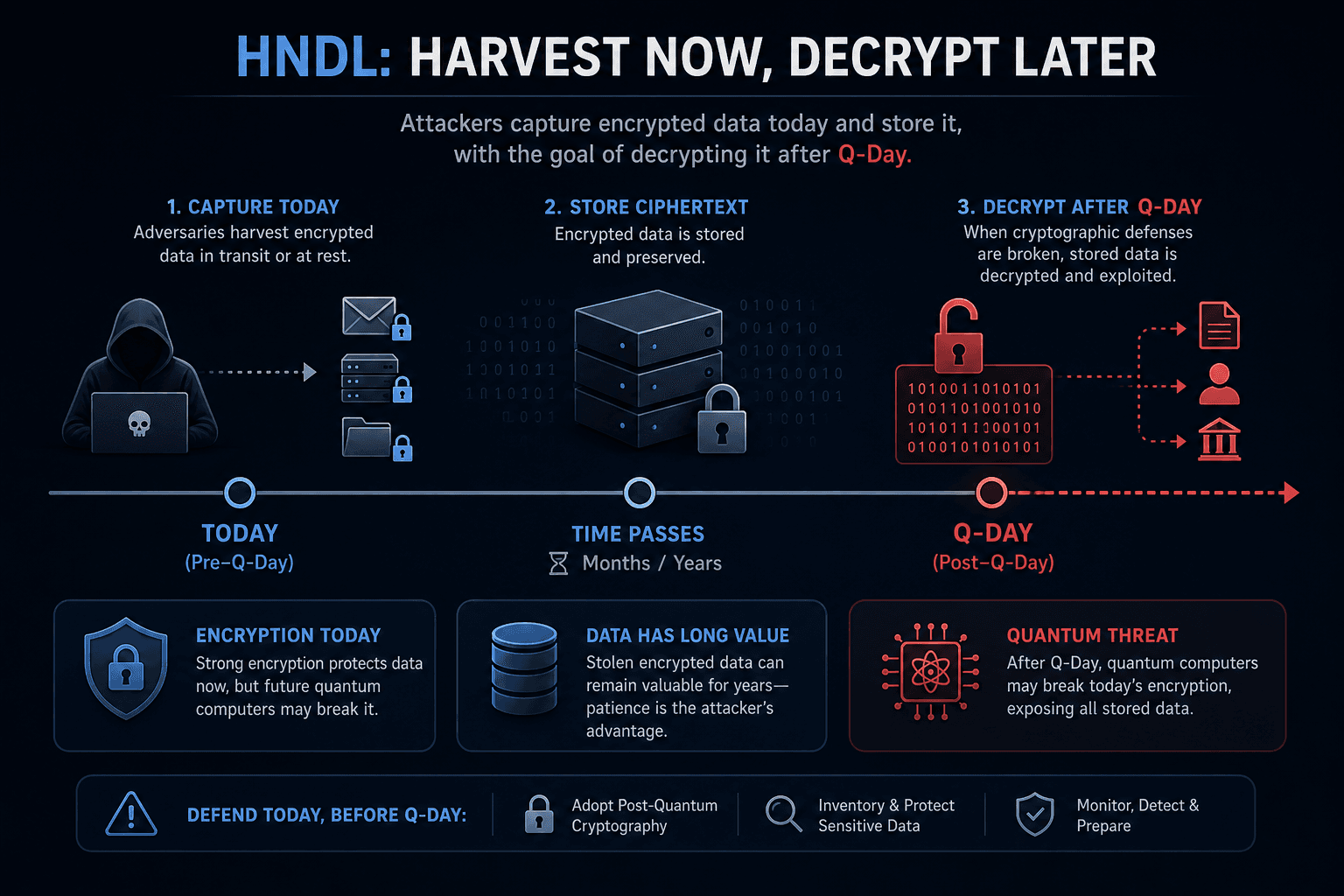
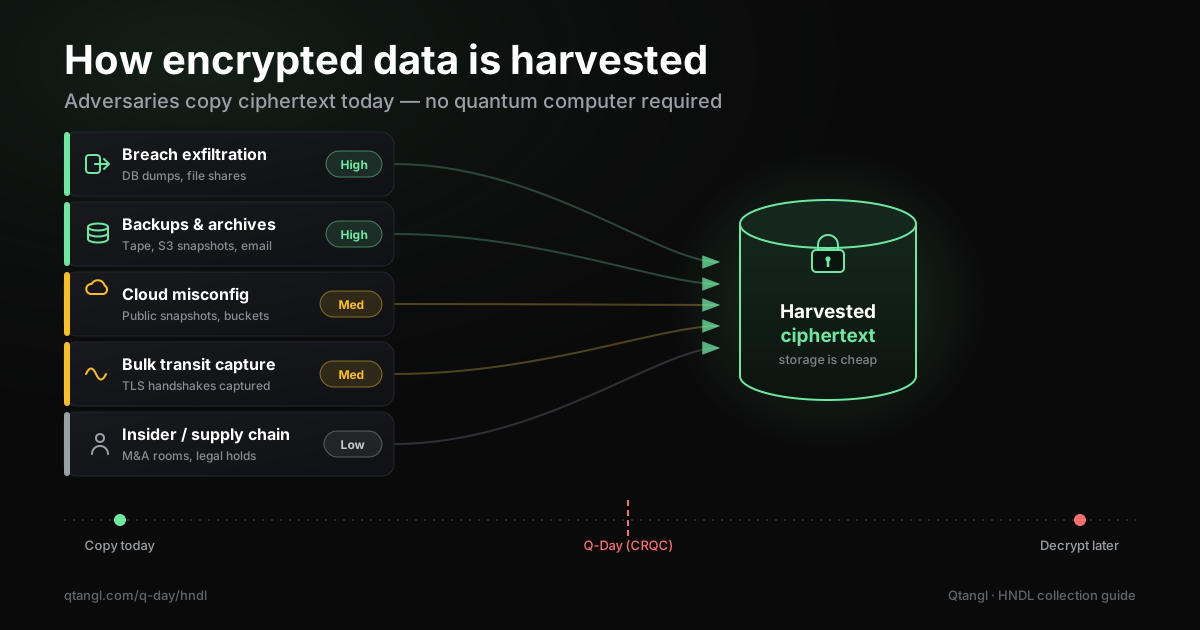
Timeline illustrating harvest-now-decrypt-later exposure before Q-Day.

Q-Day readiness

Harvest-now-decrypt-later: what boards miss

HNDL exposure, Mosca inequality, and why inventory starts before Q-Day headlines.

What boards miss about harvest-now-decrypt-later — Mosca inequality, HNDL exposure, and why quantum-vulnerable crypto needs inventory now.

Read article

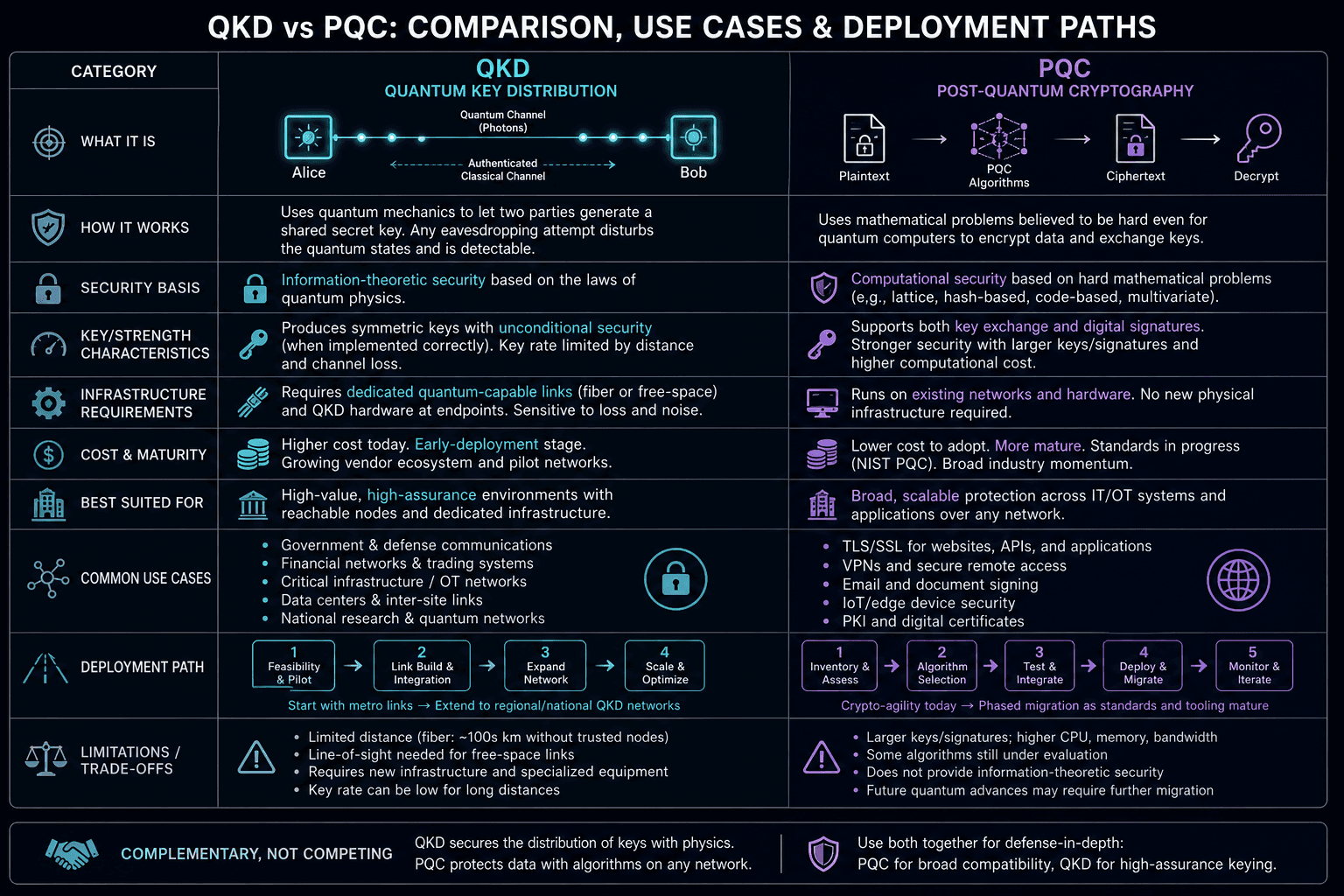
QKD versus PQC comparison diagram.

Q-Day readiness

QKD vs PQC: what security teams confuse

QKD is not a substitute for TLS migration — here's why.

Quantum key distribution vs post-quantum cryptography — different problems, different deployments.

Read article

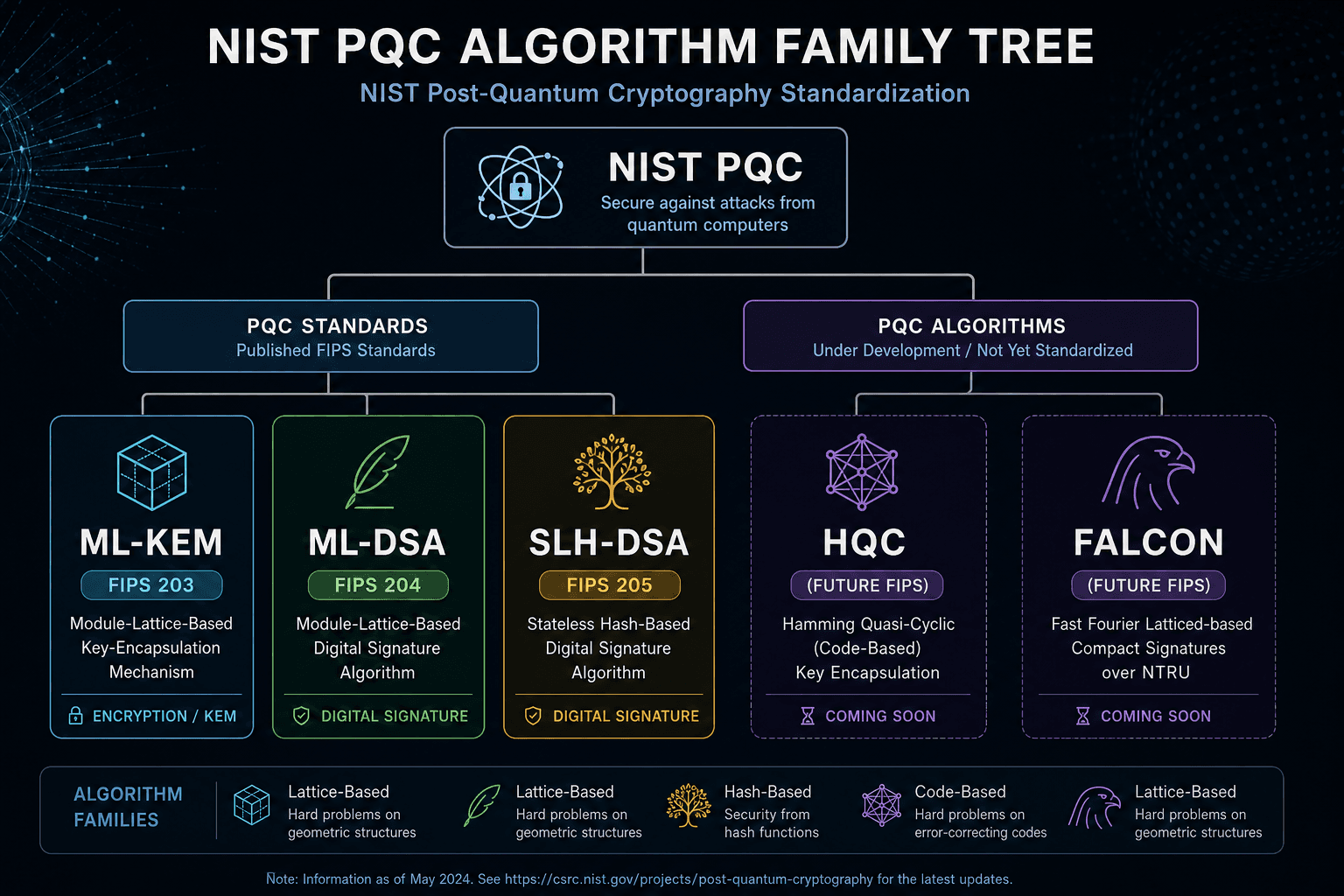
FIPS 203 204 205 algorithm primer diagram.

Q-Day readiness

FIPS 203, 204, and 205 in plain language

ML-KEM, ML-DSA, SLH-DSA — the NIST trio in plain language.

ML-KEM, ML-DSA, and SLH-DSA — what NIST standardized and what each replaces.

Read article

Subscribe: Q-Day readiness RSS